Exterior Lighting Guide
Best Outdoor Lights for Modern Indian Houses
The best exterior lighting does two jobs at once: it makes the entrance, gate and pathways easier to use after dark, and it reveals the architecture of the facade without making the house look over-lit. This guide explains which types work best, where to place them and what to check before buying.
Updated 28 August 2026 · Buying guide for Indian homes
Quick answer
Start with function, then choose the light pattern
Main entrance
Compact warm wall lights or downlights that make the doorway readable and welcoming.
Modern facade
Up-and-down lights or wall washers that reveal vertical lines, frames and textured surfaces.
Gate pillars
Simple pillar lights with an outdoor rating and proportions that suit the gate rather than overpower it.
G+2 / G+3
Layer light across selected levels instead of trying to illuminate every wall with one very bright fixture.
Compare the main types
Which outdoor light suits which part of the house?
| Light type | Best location | Best design job | Watch for |
|---|---|---|---|
| Up-and-down wall light | Entrance walls, staircase blocks, balcony frames | Creates vertical light patterns and highlights facade geometry | Beam pattern, glare, outdoor rating and spacing |
| Wall washer | Stone, brick or textured feature walls | Reveals surface texture and gives depth after dark | Distance from wall and uneven hot spots |
| Entrance wall light | Main door, porch, side entrance | Adds useful light at eye level without flooding the facade | Glare, door clearance and mounting position |
| Gate pillar light | Compound-wall and driveway pillars | Defines the entrance and makes the gate visible from the road | Scale, rain exposure and accessible wiring |
| Flood / utility light | Driveway, side yard, rear service areas | Provides functional coverage where ambience is secondary | Over-lighting, neighbour glare and poor aiming |
1. Up-and-down lights are the easiest match for a modern facade
Up-and-down wall lights suit contemporary elevations because they turn a plain wall into part of the night-time design. They work especially well beside entrances, on tall staircase walls, between balcony openings and on narrow vertical facade panels.
The important detail is restraint. Repeating the same fitting across every available wall can make a facade look busy. On a compact ground floor or G+1 home, a small number of lights around the entrance and one feature wall can be enough. On a G+2 or G+3 elevation, repeating them selectively across levels can make the height feel intentional.
2. Use wall washers where the material deserves attention
Stone cladding, brick, fluted panels and textured exterior finishes become more visible when light travels across the surface rather than hitting it flat from the front. A wall washer or carefully aimed directional fitting can therefore do more for a feature wall than a brighter general-purpose lamp.
This is also why facade materials and lighting should be considered together. If you are still selecting the exterior finish, use the HouseFolio Facade Material Guide before deciding where the electrical points should go.
3. Keep the entrance warmer and more useful than the rest of the facade
The entrance needs enough light to make the door, lock, step and visitors easy to see. A decorative facade effect should not replace practical entrance lighting. The best result is usually layered: one useful light around the doorway, with separate accent lights on nearby architectural features.
Warm white light is a strong default for residential entrances because it pairs naturally with stone, wood-look finishes, beige, cream, grey and white walls. If the rest of the house uses warm exterior lighting, keep the entrance in the same colour family so the elevation feels coherent.
4. Gate pillar lights should match the scale of the boundary wall
Gate lights are often the first exterior fittings visible from the street. On a minimal modern house, a simple black or neutral fixture usually integrates better than a heavily decorative lantern. The fixture should be large enough to read from the road without making the gate pillars look top-heavy.
Because gate pillars are often fully exposed, verify the exact outdoor rating and installation method rather than assuming a decorative light is weather resistant.
Shop the two lighting categories
Browse similar outdoor lights on Amazon India
These are category recommendations rather than claims that one specific listing is best for every house. Verify the exact product specifications before buying.
Representative imageExterior Lighting
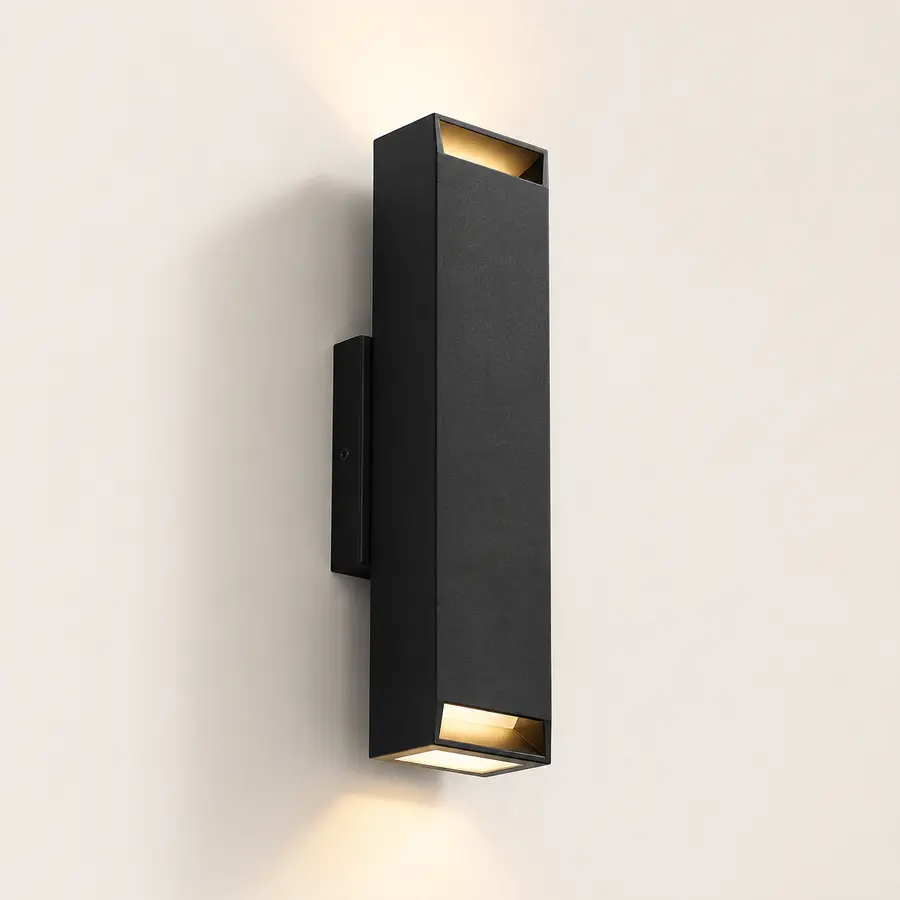
Modern Outdoor Wall Lights
Browse modern waterproof wall lights that complement contemporary Indian house exteriors and create a warm facade after sunset.
 Representative image
Entrance Lighting
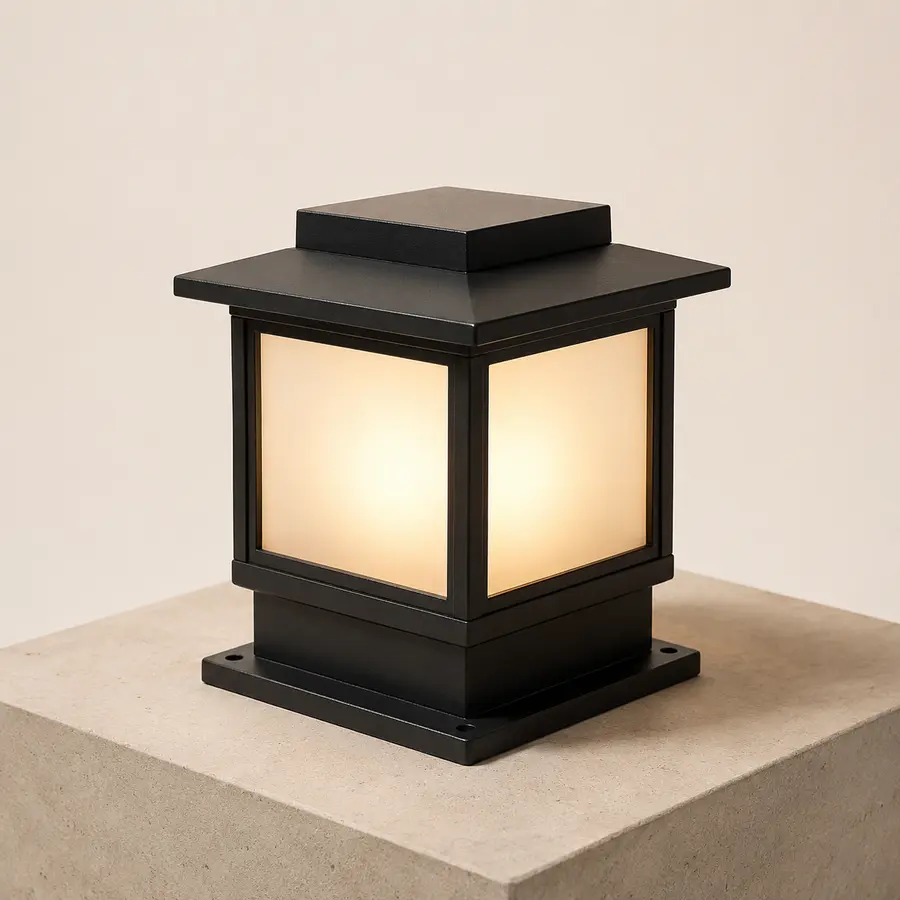
Outdoor Gate Pillar Lights
Browse stylish gate pillar lights that create a welcoming entrance and enhance your home's curb appeal after dark.
What to check before buying an outdoor light
Outdoor rating
Check the manufacturer's stated ingress-protection rating for the exact fitting and make sure it suits how exposed the location is to dust and rain.
Material and finish
Exterior fixtures face heat, rain, dust and cleaning. Check the housing material, coating and the manufacturer's outdoor-use guidance.
Light direction
Decide whether you need useful downward illumination, decorative up-and-down beams, wall washing or broad utility coverage before choosing the fixture.
Colour temperature
Keep the facade lighting palette consistent. Warm white is usually easier to integrate with residential stone, wood-look and neutral finishes.
Replaceable vs integrated LED
Integrated fittings can look compact, while replaceable lamps may be easier to service. Check the product design and warranty rather than assuming one approach is always better.
Installation
Exterior electrical work, waterproof connections and mounting should follow the product instructions and applicable local electrical requirements.
How lighting changes by house type
Ground floor
Prioritise the entrance, gate, pathway and one facade feature. Because the elevation is lower, a few well-positioned lights often create more impact than many small fixtures.
G+1
Use the ground-floor entrance as the practical layer, then add one upper balcony or vertical feature so both floors read as one composition.
G+2
Repeat selected light positions vertically or across balcony frames. Avoid placing a decorative fixture in every available wall panel.
G+3 / apartment-style
Think in zones: entrance and driveway at ground level, selected architectural accents above, and separate functional lighting for stairs, circulation and service areas.
What does IP65 mean for an outdoor light?
Do not treat the word “outdoor” as a complete specification. Philips India currently describes its IP65 outdoor wall lights as protected against dust and water, and its wall-washer guidance explains that the IP code describes protection against solids and liquids. That makes the stated IP rating a useful first filter when comparing exposed exterior fittings, but the exact installation location and manufacturer instructions still matter.
Orient Electric likewise recommends considering the purpose of the light, its IP rating, energy consumption and colour temperature when choosing outdoor lighting.
HouseFolio recommendation
For most modern Indian elevations, start with a restrained warm-white scheme: useful entrance lighting, up-and-down lights on one or two architectural features, and a separate gate or driveway solution. Then add more only where the facade or circulation actually needs it.
If you are still choosing the overall house style, browse theModern Indian House Designspillar and the Planning Guides before fixing exterior lighting points.
FAQs
Outdoor lighting questions
Which outdoor lights look best on a modern Indian house?
Up-and-down wall lights, simple wall washers, compact entrance sconces and clean gate-pillar lights usually suit modern elevations because they highlight architectural lines without adding visual clutter.
What IP rating should I look for in an outdoor wall light?
Choose a fitting with a clearly stated outdoor ingress-protection rating that suits its exact exposure. For fully exposed exterior walls, IP65 is a common specification to look for; sheltered locations may have different requirements. Always verify the manufacturer's rating and installation instructions.
Is warm white or cool white better for a house exterior?
Warm white is usually the safer design choice for residential facades because it works naturally with stone, wood-look finishes, beige, white and grey palettes. Cooler light can suit sharper contemporary schemes but can feel harsher if overused.
Where should up-and-down lights be used?
They work best on clean vertical surfaces such as entrance walls, balcony frames, staircase blocks, columns and feature panels where the light beams can create visible contrast above and below the fixture.
Do G+2 and G+3 houses need brighter exterior lights?
Not necessarily. Taller homes usually benefit more from layered placement across the facade than from simply using brighter fittings. Entrance lighting, selected wall lights and carefully positioned upper-floor accents usually look more intentional than flooding the entire elevation with light.
Sources and specification checks
Product specifications change, so HouseFolio uses manufacturer information for technical checks and recommends verifying the exact listing before purchase.